
All about writing a manufacturing business plan

No matter what type of business that you are running you need a business plan. However, if you are setting up a manufacturing business then it becomes crucial to have a well researched and well written business plan. Manufacturing is a detailed and complicated type of business. By having a business plan you can eliminate the guesswork that can sabotage your manufacturing business and doom it before it even gets started. Unfortunately, many prospective manufacturing business owners overlook this important step. This can be serious mistake. The good news is that there is a wealth of information to help you write a manufacturing business plan. Here is what you need to know about writing a manufacturing business plan-
Take time to plan before assuming it will be easy

Are you planning out your manufacturing organization? If you would like to get started in the manufacturing world, you need to work with several people because this is not going to be an easy feat. You need to believe in yourself to get started but then comes the hard part of convincing lenders to give you money and to also convince your clients why they need your products.
Maintenance and Manufacturing
 Maintenance of the machines that keep production running is always a priority, for manufacturers. The undeniable fact for manufacturing businesses is that keeping repair costs low, can only be done through regular maintenance. The bottom line is that if the tools, computers, vehicles, and anything else used for manufacturing, maintained better, they last longer. It is important to understand that regular maintenance lowers repair costs. Ignoring maintenance of the tools, machines, vehicles etc that are used will cost you more in the long run simply, because you are looking at much more wear and tear. While there are some tools, vehicles, and machines, that require a maintenance program, there are also times that whether there is a requirement for maintenance or not, you will still want to keep the maintenance up. Because of this there are steps you can do in a manufacturing setting to keep the process of maintenance up, and repair costs down. Here is what you need to know about maintenance and manufacturing-
Practical applications of Six Sigma
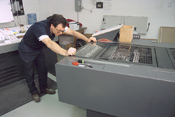 Six Sigma originated in the manufacturing industry and it remains one of the most popular methods to reduce waste and to focus on productivity. When a product is manufactured, it can be easy for you to have product errors due to poor manufacturing. You will need to find a way to implement Six Sigma in order to reduce your defect ratio. The overall goal of Six Sigma is to get your error ratio to less than 3.4 defects per million unite produced. By focusing on every little aspect of Six Sigma, you will be able to accomplish this goal and you will be able to create a healthy working environment.
What you need to know about starting your own manufacturing company
 Manufacturing will always be the lifeblood of any market place. The manufacturing industry is one that has been around for hundreds of years and will continue to be around for many years to come. This has lead to a constant stream of potential manufacturers looking to start their own company. However, it is crucial to understand that if you want to start your own manufacturing company, you will need much more then just a great idea. Here is what you need to know about starting your own manufacturing company-
Understanding the 5 S system
 A number of manufacturing companies use the 5 S system as it is a great way to organize the business, increase efficiency, reduce waste, and provide your customers with better products and services. What is the 5 S system and how can it help your company? This article will help you learn more about the 5 S system along with several things you can do to improve your business.
Manufacturing trade associations
 A trade association is an organization that was created for the sole purpose of specific businesses getting together. Many manufacturers are now joining together in trade associations. These trade associations are designed, to be able to join for a common purpose, which was to share information on the industry that they worked in. This works for virtually any industry, but trade associations seem to work especially well, for the manufacturing industry. If you are a manufacturer here is what you should know about manufacturing trade associations-
Job Description for Six Sigma Black Belts
 A Black Belt within the Six Sigma process method is done by someone, who is trained and willing to assume a leadership role. This person will have completed the training needed to gain extensive knowledge of the Six Sigma philosophies. A person who is certified with a Black Belt must be able to show team leadership and responsibilities, while working in a management or non management position. In addition, they will also have to be educated on lean management, and DMAIC, to qualify for the Black Belt role. By being certified as a Six Sigma Black Belt, it will allow the employee, to be responsible, for helping employees meet their potential and their goals. It will also allow them to oversee projects that are directly under the Six Sigma guidelines. It is important to understand that when an employee is a Black Belt, many times they will work in a management position, but often times they will be asked to use their skills on certain issues.
Inventory control help
 Managing your inventory is important to the overall cash flow and financial health of your company. One of the biggest mistakes almost every company makes is buying too much inventory. Holding a lot of inventory will tie up your cash reserves and it can lead to problems for your company as you won't end up making back the value of the products when you go to sell them. The problem is leaving the products in inventory causes problems because they continue to lose their value until they are eventually sold.
Implementing Six Sigma
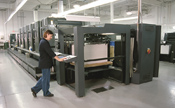 Manufacturing companies are prone to a number of errors in the manufacturing line. Machinery can get messed up and leave you with bad products or you can have employees that don't work hard and end up neglecting their role within the company. Since errors lead to waste, which leads to financial loss, customer uproar, and unhappy employees you need to focus on fixing the problems early. Implementing Six Sigma is one of the best ways to improve your company.
What you need to know about starting your own manufacturing company
 Manufacturing will always be the lifeblood of any market place. The manufacturing industry is one that has been around for hundreds of years and will continue to be around for many years to come. This has lead to a constant stream of potential manufacturers looking to start their own company. However, it is crucial to understand that if you want to start your own manufacturing company, you will need much more then just a great idea. Here is what you need to know about starting your own manufacturing company-
Manufacturing trade associations
 A trade association is an organization that was created for the sole purpose of specific businesses getting together. Many manufacturers are now joining together in trade associations. These trade associations are designed, to be able to join for a common purpose, which was to share information on the industry that they worked in. This works for virtually any industry, but trade associations seem to work especially well, for the manufacturing industry. If you are a manufacturer here is what you should know about manufacturing trade associations-
Working with overseas manufacturers
 Outsourcing your manufacturing can cut costs, but it can be a danger to your company as well. Overseas outsourcing can cause a lot of frustration to your customers as many of the call centers overseas have very thick accents, making it hard for your customers to get the support and help they need. However the cost of having toys and other things manufactured overseas may be significantly less due to salaries of the workers. In overseas countries the value of the dollar may be much higher, causing you to pay less per unit that you will in the States.
What to watch out for with contract manufacturing
 Contract manufacturing is when you hire out your manufacturing processes to an outside firm. When you create a working agreement from your company to another company, you are involved in a contract that allows you to produce products for another company or vice versa. Many times you will be in charge of other things like ordering the raw goods along with the shipping of the products. If you are the company hiring contract manufacturing, you are able to save money on warehousing along with labor costs. The purchase of the raw materials, producing products, and warehousing these products can become extremely costly in a hurry.
What happens if you have manufacturing overhead?
 Every company has some type of manufacturing overhead. Unfortunately manufacturing is an expense that can sometimes be hard to control. It is an expense that is a little different to work with as you are unable to charge it to a project or to a product that you sell. Manufacturing overhead allows you to stay in business but they are harder to control as they cannot be directly pinpointed to a single product or service.
Understanding advanced manufacturing
 Manufacturing relies on customers to make orders and machines or employees to fulfill those orders. Advanced manufacturing can help a company keep up with the demands of the customers by introducing new technology and equipment to generate products and maintain a consistent level of efficiency. Advanced manufacturing relies on a specialized training to create such an effective working environment. You must follow a system of advanced planning and scheduling, also known as APS.
The journey of becoming a lean manufacturing firm
 Lean manufacturing is one of the best ways to eliminate errors, boost employee morale, reduce costs, and strengthen your relationship with your customers. Many of the large corporations and looking into lean manufacturing because it allows a business to run smoothly and easily. It can take 6 months or longer to implement lean manufacturing and have it start to show signs of success.
Should you hire a lean manufacturing consultant?
 Lean manufacturing provides you with a chance to lower costs and improve the overall production of your business. A number of businesses are turning to lean manufacturing as it is easy to implement it with just about every type of business entity. Smaller companies (like a dental office) may not need to hire a lean manufacturing consultant to come in and provide training to implement lean manufacturing. Larger companies should contact a lean manufacturing consultant to come in and train your employees.
How to start your own manufacturing business
 A number of people are searching for new jobs to create and companies to invent. The manufacturing industry is one that has been around for hundreds of years and will continue to be around for many years to come. If you have a great idea for a manufacturing company, the first thing you must do is acquiring the right financing for it.
A beginner's guide to lean manufacturing
Are you looking for a way to increase your profits and create a productive working environment? Lean manufacturing is one of the best ways to meet customer satisfaction ratings and to strengthen your business as a whole. When you focus on implementing lean manufacturing, you will find ways to reduce wastes and produce higher quality products. This article will offer a simple guide to lean manufacturing so you can get on the fast track to running a successful business.
Implementing Six Sigma policies
 Six Sigma involves time, manpower, and money to implement. Unlike other projects, it is not something you can implement and then expect it to succeed without involvement from your employees. Successful implementation is done on a project-by-project basis and will result in continuous improvement of processes. Successful implementation also depends on many factors like the company's culture and the commitment and conviction of its leadership. Without these factors, the Six Sigma process can fail. To avoid failure, follow these tips on how to properly implement Six Sigma:
Implementing process improvement roles
 Process improvement focuses on getting things right the first time you do them. Instead of waiting for variations and product mistakes, you will take steps to change the inputs so the outputs are correct. Typically process improvement will define the goals of the company to figure out what purposes your product serves. From here you will determine who your customers are and why you serve them. The last thing process improvement will uncover is how to align your business process to make production faster and speed up all the other systems within the company.
How production flow impacts your process improvement strategy
 Manufacturing plants often work with process improvement strategies to reduce errors, accidents, and waste. Many companies engage in production flow or mass production. Production flow refers to mass amounts of products being produced by large machines on assembly lines. Car manufacturers are often thought of when you hear the word `production flow'. This is usually due to the Ford Model T car that was produced using mass production in the early 1900's.
How does TQM help my business?
With all the different process improvement strategies out there, it is easy to get confused about which ones you should use to reduce wastes. One of the process improvement strategies out there is Total Quality Management or TQM. TQM helps to eliminate waste and improve the production process through various standards. Here are some examples as to how TQM can help to improve your business:
Creating key performance indicators
 Key performance indicators (KPI) are used to measure the performance of different processes within a company. Typically KPIs come in the form of scorecards and graphs. KPIs look at performance over time, which is why it is typically displayed as a graph. Time series charts are the best way to display KPIs. Companies that implement lean manufacturing or process improvement often use KPIs to measure their data. Here are some tips on how to create key performance indicators:
A guide to business process management
 Business process management (BPM) encompasses a handful of different process improvement strategies that focus on reducing waste and improving customer satisfaction. When people talk about lean manufacturing, Six Sigma, TQM, and business optimization, it all falls under the category of business process management.
The purpose of BPM is to change the way you do business. If you currently have a lot of manufacturing problems, BPM focuses on stepping back and taking a look at the big picture. You need to diagnose the problems, analyze them, and look for ways to implement change. BPM holds your company to a higher standard of quality. No longer are you able to just toss aside defective products, you need to find the reason why the product is defective and stop future problems from happening.
Continue reading "A guide to business process management"Winning manufacturing business grants
 Entrepreneurs all over the country are talking about government grants and are trying to find every way possible to use the money that is available for their business.There are many different types of grants available for existing businesses and especially those in the manufacturing sector.Here are some tips to help you win them.
Why apply for government grants
 Almost all business owners are looking for new and inventive ways to help them save money and to get more money to put into the business to make it more successful.This can be a challenging task for any business no matter what the size.But there are many opportunities available and government grants are one of the options that businesses can take advantage of to help fund their business.
Using a manufacturing grant
 Government grants are often seen as a great way to get money to develop or start a business and to get money for free from someone who never has to be repaid.There are a lot of different tricks involved with winning a grant and then there is the question of how the money can be spent.Here is some more information about using a manufacturing grant.
Trade associations
 If your business is in the manufacturing industry, you might be thinking about joining a trade association, which is a smart move for any industry that you work in. A trade association is an organization that was created for the sole purpose of specific businesses getting together. Trade associations were designed for specific industries to be able to join for a common purpose, which was to share information on the industry that they worked in.
Securing your intellectual property rights
If you are interested in using a trademark for your manufacturing business you are going to need to make sure that you secure your trademark. Securing your intellectual property, even if it is just the name of your business is important because it is going to protect your business from your competitors. When you secure your intellectual property what that means is that nobody else can go through and use your business ideas. Securing your intellectual property can include protecting any business ideas that you might have, such as a product that you have invented, it can also mean you need to trademark your business name so that nobody else can use it. Protecting the name of your business is important so that nobody else can use the business name, which prevents people from getting your business confused with other businesses, especially your competitors.
Reasons to join a trade association
 A trade association is a group of people or businesses who have joined together to create a group that has a shared interest, in this case manufacturing. The group could even have been created for the product that you are manufacturing; the main point is that the group shares a common interest. Trade associations can even be organized around a functional area, such as a specific machine your manufacturing plant uses.
Patent tips for manufacturers
 As a manufacturer chances are that you have invented a product that you want to manufacture. The problem is that you do not want other people to be able to manufacture the same product that you designed without your permission. The only way to ensure that other people do not manufacture your invented product is to patent your product. A patent is going to give you the exclusive right to use your idea for your business, whether it is for manufacturing a product you invented or for a process that you designed to make things easier for your business.
Here are some tips that you will want to keep in mind when applying for a patent.
Continue reading "Patent tips for manufacturers"Ownership
 The manufacturing business is a multi-level structure.From the owner of a manufacturing business, to the owner of a manufacturing process, machine, or product, there are owners on every level of the manufacturing business.Here are a few different types of owners in the multi-level manufacturing structure and how they are interrelated.
Just In Time manufacturing
 Just In Time manufacturing is one of the types of manufacturing used by many companies today. This article discusses more about Just In Time manufacturing.
What is Just In Time manufacturing?
Just In Time manufacturing is a specific type of manufacturing and can actually be considered a type of strategy. The main objective of Just In Time manufacturing is to save the manufacturer money. A manufacturer who uses Just In Time manufacturing believes that having an inventory of raw materials is a waste. A manufacturer can spend a lot of money purchasing inventory for it to just sit and take up space. And not only does the manufacturer have money in the inventory of raw materials, they are also paying for the space to house the inventory.
Continue reading "Just In Time manufacturing"Joining a trade association
 Regardless of what size your business is it is always nice to have other people to talk to when you are facing hard times with your business. Joining a trade association is one of the best ways that you can go about getting into contact with other people who are in your industry. When you join a trade association you can join one that offers you local chapter meetings or you can find one that offers conferences once a year at a central location. Choosing a trade association is going to depend on what your needs are and what you expect to get out of the trade association.
Here are the steps you will want to follow to help choose a trade association that is right for your manufacturing business.
Continue reading "Joining a trade association"Benefits of joining the Tooling and Manufacturing Association
 One of the more popular manufacturing associations is based in the State of Illinois; it is called the Tooling and Manufacturing Association. If you live in Illinois or your business is incorporated in Illinois you would find it beneficial to join this manufacturing association because of the many benefits that it provides. If you do not live in Illinois you should look into your state to see if they offer a manufacturing association that has similar benefits for your manufacturing business.
Here are some of the benefits your manufacturing business will receive if you join the Tooling and Manufacturing Association.
Continue reading "Benefits of joining the Tooling and Manufacturing Association"Small Business guide to manufacturing processes
While many people assume that small businesses are often not associated with manufacturing, in the U.S. small manufacturers can be found in all fifty states. Organizations such as the American Small Manufacturers Coalition (ASMC) exist solely to promote small manufacturers and to lobby government to assist with legislation and federal programs.
Small manufacturers offer specialized and personalized products that larger manufacturers cannot make profitably. Niche manufacturing by small manufacturers can allow them to operate in areas that have little or no competition from larger companies.
Doing business with China
Industrial trend indicate that doing business with China better be on everyone's priority list.Knowing how to expand and do business in China before the opportunity arises will allow companies to capitalize on the movement of the trend. Companies who are looking to expand their business in China would do well to pay attention to several key factors that could help grow their China-based operations.
Industrial trends have shown that so many companies are headed there in droves, many have stayed and more continue to arrive. According to the U.S.-China Business Council's 2008 survey, 90 percent of the council's members are highly optimistic about expanding their businesses in China over the next five years, as the majority of these companies reported profitable operations. Although rising costs continue to be a growing concern, nearly half say their margins in China were better than their margins globally.
Continue reading "Doing business with China"B2MML
Have you ever wondered about how complex manufacturing systems work? How, for example, do large manufacturing processes that take raw material inputs know how much should come through their manufacturing plant? Consider how a thermometer measures the temprature in a room and then makes changes with the furnace. If the temperature is too low the furnace is turned on by a controller mechanism known as an industrial control system. Without these systems many of the systems in our homes or businesses would not work. In manufacturing these control systems are absolutely central to everything. A controller needs to monitor the material coming into the process. There is a target level of production which varies depending on certain conditions. The controller alters the total amount of material depending on these conditions. Any engineer will tell you that it is absolutely imperative that a control system be in place for any type of heavy manufacturing. Control systems have become a major part of manufacturing and the computer systems that come with them are just as important.
Overhauling your company based on six sigma ideas

Since six sigma is, a quality measurement and improvement program there should be no questions as to why you should implement it at your manufacturing plant. Many people wonder why they should overhaul their manufacturing plant with six sigma ideas instead of any of the other manufacturing processes that are designed to improve your manufacturing process.
Here are some reasons as to why you should use six sigma ideas to overhaul your company.
Continue reading "Overhauling your company based on six sigma ideas"Tips for working with non-English speaking employees in manufacturing

The number of non-English speaking workers in the US has grown steadily for years now and has shown no sign of slowing. Right now, in fact, roughly 11% of jobs in America are filled by those who speak no English at all; in manufacturing plants or other laborious jobs, that number frequently rises to over 50%. As a result, it is not uncommon for manufacturing workers to work with people who either don't speak English at all or speak very little.
While this may present various challenges to English speaking workers, there are a number of things you can do while working with non-English speaking employees in manufacturing.
Continue reading "Tips for working with non-English speaking employees in manufacturing"How to do find replacement parts from companies no longer in business?

When you run a business, and especially a manufacturing business you deal with a lot of tools and machinery on a regular basis. It is through these tools that you are able to assemble whatever product it is that you sell. So, naturally if one of these tools or pieces of machinery were to break down, and need a replacement part, you would want to be able to get that replacement part and have it installed so the machinery can be repaired as quickly as possible.
Now, normally when someone needs a replacement part for something they simply call up the manufacturer, or part supplier and order the need part. However, this is not always as easy as it sounds. Unfortunately you can run into some big road bumps when trying to find replacement parts for some of your equipment.
How to avoid ERP failures

What is ERP?
ERP stands for Enterprise Resource Planning. This is an information system that integrates all manufacturing and related applications for an entire enterprise.
An ERP is a great idea for manufacturers if it is done right. ERP failure on the other hand is a big problem as it involves great money. However, ERP success makes great money. In order to avoid ERP failure you should know what causes it:
The causes of ERP failure can be a result of any of the following elements acting in combination or individually. These are to name a few:
- Trouble in Installation
- Business related issues
- Reluctance of end Users
Improving flow through production leveling

Improving flow through production leveling is one component of leanmanufacturing, which is an approach to manufacturing that strives to improve productivity and quality by cutting down on waste in all different aspects of the manufacturing process.Lean manufacturing first surfaced in Japan as a process management philosophy from Toyota Production System, also known as TPS.It strives to improve customer value by reducing a number of different wastes.Lean manufacturing can also be used in conjunction with the six sigma approach to management and manufacturing because lean manufacturing works on cutting down on waste and six sigma works on reducing variations in the processes of manufacturing or providing services.
One way that lean manufacturing works to reduce waste, and even eliminate waste if possible from manufacturing processes and service processes is by improving the flow of work through the manufacturing system, instead of just focusing on eliminating waste.There are several different approaches to improving the flow of products by leveling production by means of what are called Kanban and the Heijunka box.
How to deal with manufacturing contracts

One of the most important and the most central parts of manufacturing has nothing to do with the actual manufacturing processes.Instead, it has to do with the contracts for that manufacturing.If you are going to be a successful manufacturer, then you have to know how to manage your contracts and how to work those contracts so that you can actually make a profit on your manufacturing processes.You may actually end up with contracts whose terms and conditions end up being a total risk and exposure that is greater than the annual revenue of your company.Because your manufacturing contracts can be entail so much risk, then you need to make sure that you know how to manage your contracts and that you are committed to negotiating a contract that is mutually beneficial.You also need to ensure that you are all committed to making sure that the contract is met, on both sides, and that all conditions and benefits and obligations are fulfilled.
Making your manufacturing more profitable

The manufacturing process is very complex.It is made up of multiple elements that make any number of problems possible.At the same time, manufacturing contains an immense potential for making a profit.Here are a few suggestions on how to make manufacturing more profitable.
Rescheduling
Manufacturers often rely on parts and pieces that are shipped to them from many different parts of the world.Because a manufacturer cannot produce without the initial parts, planning for disruption can be an effective way to increase profits.By implementing software that can connect with the other companies who are shipping the parts to the manufacturer and that can predict resource conflicts, knowing when to send a job to the job shop will become much more predictable.This will save the manufacturer money and subsequently bring in a higher profit.
Continue reading "Making your manufacturing more profitable"Using Business Process Improvement for manufacturing

Manufacturing and Business Process Improvement (BPI) share similar goals. Manufacturing companies know that repeatability is a key component to their organization. BPI provides a way to measure the effectiveness and repeatability of processes. To understand how BPI can help your company in the manufacturing industry, we must learn a little bit about BPI.
Business Process Improvement focuses on helping businesses make changes in the way they are doing business. It works with three steps:
- Defining the organization's strategic goals and purposes (Who are we, what do we do, and why do we do it?)
- Determining the organization's customers (or stakeholders) (Who do we serve?)
- Aligning the business processes to realize the organization's goals (How do we do it better?)
How to implement six sigma policies into your manufacturing business

The Six Sigma process has caught fire with many top companies such as AlliedSignal, GE and Motorola. It is a process that involves a lot of time and a lot of manpower in order to achieve results. Successful implementation is done on a project-by-project basis and will result in continuous improvement of processes. Successful implementation also depends on many factors like the company's culture and the commitment and conviction of its leadership. Without these factors, the Six Sigma process can fail, however successful implementation into your manufacturing business is not as hard as it seems. Below you will find some steps for successful implementation.
The Company Culture
If this is the first process improvement program you have implemented to your company; it may be a little challenging. Organizing the process and having commitment from everyone involved is not always simple. Many times companies find themselves trying new strategies so often that employees don't take them seriously and are resistant to change. This is why the leaders of the process highly influence the company culture. The leaders need to buy in and commit themselves to Six Sigma and their examples will trickle down to everyone in the organization.
What is a sustainable development partnership, and what does it have to do with manufacturing?
A sustainable development partnership, as it is defined by the U.S. Government's Sustainable Development Partnerships Web Site, is intended to "plan and implement voluntary partnerships that promote economic growth, social development and environmental stewardship."The U.S. is partnering with other countries in an effort to create and implement strategies that will meet the goals of the partnership both at home and abroad.Just a few of the areas where these strategies are being implemented include:
- Poverty reduction
- Universal primary education
- Access to clean water and sanitation services
- Access to energy services
- Reducing the spread of infectious diseases
- Reducing hunger and promoting agricultural and rural development
- Conservation and environmental stewardship
- Protecting marine and freshwater resources.
Using BCP (business continuity planning) to reduce operational risks
When a business continuity plan is correctly used it can help reduce operational risks.Operational risk is the risk of loss experienced from internal processes as a result of external events. These internal processes could have failed completely or simply been inadequate.This does include calculating the legal risk as well but does not take into account business risk that is based in strategy or reputation.Some examples of operational risk are losses arising because of internal or external frauds, natural disaster, failed transaction processing or inability to meet the commitment of service, and the disruption of business or system failures.
There are basically five steps in developing and using a business continuity plan. These are: analysis, solution design, implementation, testing and organization acceptance, and maintenance.The complete process to develop a business continuity plan is far to complex to be fully developed here.Careful research by an organization's management to truly understand the needs of their organization is crucial.This can be followed by an in-depth analysis and solution design.These programs can be put into place in-house or a specialty consulting firm can be used in the design of the business continuity plan.That leads to the remaining three steps that become crucial in using the business continuity plan to reduce operational risk.Here is a brief examination of the remaining steps-
Should you use business continuity planning?
Should you use business continuity planning? Yes, but let's take a look at why:
Business continuity planning (BCP) is a methodology used to create and validate an exercised logistical plan for how a company will recover and restore partially or completely interrupted critical functions within a predetermined time after a disaster or extended disruption.Or in easier and plainer terms its how to resume the running of your business or organization after you have been hit by an emergency or disaster.It could be something like a localized power outage or something as national and long term as a pandemic illness. A business continuity plan can be used by any organization as a learning effort that helps reduce operational risk associated with lack of managerial control during a disaster. This process can be combined with improving information security and corporate reputation risk management practices.
5 tips for testing your BCP
The process of determining and implementing procedures to ensure that a business or organization is able to quickly recover from disasters and major disruptions is called a business continuity plan. The goal of business continuity planning is to reduce the impact of a disaster outage or interruption to an acceptable level and allow the business to continue functioning until normal operations can be fully established. An organization should develop a business continuity plan for many reasons but perhaps the most important being that those who run companies are morally and ethically bound to make decisions and plans that will insure the business or government agency continues to operate and serve customers and service recipients. Many companies and most government organizations are required by law to develop continuity and contingency plans. All upper and executive management staff should be made to feel responsible for the survivability and sustainability of their organization or company.
As with any plan the testing for success should come before the actual disaster.This insures that personnel, facilities and all needed materials are at the ready should the worst occur.There are several different ways the business continuity plan can be tested based on the specific needs of the organization.Here are 5 general tests that can be run to help evaluate a business continuity plan-
How variation defines the sigma level in six sigma
You're a business owner.You manufacture things.Or maybe you're the manager of a business.Or maybe you're just an employee at a business. Either way, you're probably being encouraged on a daily basis to improve your company in every way you can.Your boss (or you as the boss) tries to help you to work as quickly, efficiently and as cost effective as possible.You're always striving to find new ways to make these improvements.And in case you're unaware, applying the principles of six sigma is an excellent way to improve your business.This article will discuss six sigma and how variation defines the sigma level in six sigma.And hopefully after reading this article you will have a better idea of how to improve your company.
Since you may or may not be familiar with six sigma, let us begin with an explanation of exactly what it is.Six sigma is a system of practices that were created by the company Motorola.The purpose is to eliminate defects in a company.By defects we mean anything outside of customer specifications.In other words, the parts of a product or service that are not part of the intended population.An example of a defect might be something like this: you do market surveys to see if people would buy chocolate scented perfume, and eventually decide that they would.So you create some chocolate scented perfume and put it on the market.After a few weeks you realize that no one is buying your product.You look back at your market surveys and realize that what the customers really wanted was vanilla scented perfume.This would be considered a defect because you were unable to realize what the customers desired.
The importance of having a manufacturing strategic plan
Picture this, you enter a room full of well over a thousand people. You are there to speak to them about __________. You walk up to the microphone and realize you have no plan, no notes, no slides, nothing to work from, and a very small working knowledge of the subject. What do you do? Do you wing it and hope for the best? Do you apologize? What? Now imagine your whole career, livelihood and even your home are dependant on how well you do. Would that make you nervous?
Manufacturing without a strategic plan is much like walking into that room of thousands in order to speak and having nothing to say. This is your business, your livelihood, don't go at it haphazardly, or on the fly, go into it with a sure fire plan. A strategic plan plays a huge role in shaping the success of industrial firms. Without a plan, it will not matter how good you work is. It is like reading a book that has great prose but no organized plot. No matter how good each line is alone, if it is not all together it is of little use.
Continue reading "The importance of having a manufacturing strategic plan"What is a customer in context of six sigma?
Whether you are a business owner or just a customer there are certain things you should be aware of about the business world.If you are a business owner you are most likely in a constant battle to improve your business and customer relations.You may be trying to eliminate all defects in your product and services so that your customers remain content.If you are a customer, you're probably trying to make your desires known so that you are able to get the products and services you need most.Well one thing that can help both business owner and customer is called "six sigma."This article will discuss what six sigma is and how it relates to a customer.
What is six sigma?Six sigma is a method of practices created by Motorola in order to eliminate defects in a company (the term "defect" will be discussed in greater length further in this article).To many companies, six sigma symbolizes a constant striving for perfection in all aspects of their businesses.It is a disciplined approach towards driving six standard deviations between the mean and nearest specification limit in any process-from manufacturing or products to service.Six sigma is a method of describing how a process in a company is performing.
What is a value stream map and how is it used in Six Sigma?
Value stream mapping (VSM) is a tool that helps you to see and understand the flow of material and information as a product or service moves through the value stream.This is defined as all of the activities, both value adding and non-value adding (wastes) that are required to bring a product from raw materials into the hands of the customer. A future state map is then created which leads to the creation of an implementation plan.
VSM is sometimes referred to as an end-to-end system map because it takes into account the activity of the product in all phases of production, including the management and information systems that support the basic process.It covers all aspects of production from receiving of raw material to delivery of finished goods.You are able to gain insight into the decision making flow as well as the process flow.