
Legal rights when dealing with product defects

Have you been injured thanks to faulty manufacturing? What are your legal rights when you are dealing with faulty manufacturing? It helps to meet with a personal injury lawyer as they will be able to investigate your case and will let you know what your rights are. Some manufacturing companies will publish a hotline for product returns and defects. You need to read up on the packaging in order to see if there is a number you can call. When product defects occur most companies will end up contacting customers by publishing material and sending it to all the people they know purchased the product. They will often take out radio ads and television ads in order to help inform people. They need to be sure you will be able to return the product and to get the compensation you deserve.
Six Sigma laws
 Six Sigma is designed to improve the operational performance of a company by reducing defects using a series of statistical methods. To help reduce wastes, companies must properly implement 5 laws of Six Sigma. The 5 laws have been designed to improve and upgrade the quality of a companies existing business processes to produce satisfied customer relations. The Six Sigma laws are defined as follows:
Dealing with waste in lean manufacturing
 Lean manufacturing focuses on the elimination of waste. Waste is anything that does not add value to the company. In order to start eliminating waste, you must be able to identify it first. Take a look at your processes and check for inefficiencies and redundancies. One way to look for waste is to listen for it. While this may sound strange, it actually works.
Ways to get rid of hazardous waste
 If your manufacturing business deals with any kind of hazardous waste, you are going to want to make sure that it is properly disposed of. To properly dispose of the hazardous waste you will need to make sure that you are following any laws that were enacted by the legislation that deal with hazardous waste. If your manufacturing business chooses not to properly dispose of hazardous waste, your business can face prosecution. This can result in jail time or a fine that needs to be paid as a form of punishment.
Reporting intellectual property infringements
 Once you have trademarked, patented, or copyrighted your product you are going to want to protect your intellectual property. Protecting your intellectual property is important because it is going to prevent other business from using your products. The main reason for this is that you do not want to allow other businesses to manufacture your products because you can lose customers, nor do you want them to sell products under your business name because you can lose customers. Even using a similar trademark needs to be prevented because your customers can become confused by another company, thinking it is your business instead of your competitors.
Securing your intellectual property rights
 If you are interested in using a trademark for your manufacturing business you are going to need to make sure that you secure your trademark. Securing your intellectual property, even if it is just the name of your business is important because it is going to protect your business from your competitors. When you secure your intellectual property what that means is that nobody else can go through and use your business ideas. Securing your intellectual property can include protecting any business ideas that you might have, such as a product that you have invented, it can also mean you need to trademark your business name so that nobody else can use it. Protecting the name of your business is important so that nobody else can use the business name, which prevents people from getting your business confused with other businesses, especially your competitors.
New tax regulations for contract manufacturing
 In December of 2008 the United States Treasury department in conjunction with the IRS released new regulations for contract manufacturing. The new regulations were designed to update the previous contract manufacturing regulations so that the regulations were taking a more modern approach to the issues at hand.
Here is a closer look at the more significant changes to the regulations for contract manufacturing.
Continue reading "New tax regulations for contract manufacturing"Making your manufacturing plant safer
 Manufacturing can be a dangerous profession. Heavy machinery, lots of moving parts, and other factors make it easy to get injured while on the job. This is bad not only for the employee who was injured, but can result in lawsuits and hefty fines for the company.
As a manager, safety should be one of your top priorities. Ensuring safety in the workplace is a manager's responsibility.
Continue reading "Making your manufacturing plant safer"Joining a trade association
 Regardless of what size your business is it is always nice to have other people to talk to when you are facing hard times with your business. Joining a trade association is one of the best ways that you can go about getting into contact with other people who are in your industry. When you join a trade association you can join one that offers you local chapter meetings or you can find one that offers conferences once a year at a central location. Choosing a trade association is going to depend on what your needs are and what you expect to get out of the trade association.
Here are the steps you will want to follow to help choose a trade association that is right for your manufacturing business.
Continue reading "Joining a trade association"Identifying hazardous waste
 As a manufacturer, you should already be aware of the fact that you must dispose of your hazardous waste in a proper manner. If you fail to properly dispose of any hazardous waste, your manufacturing business can be fined a large amount of money. Getting g rid of hazardous waste properly is important because of the harmful effects that hazardous waste has on the environment and some of it can be harmful to people's health.
General labor laws
 In the manufacturing industry, you are going to need to follow most of the federal labor laws; there will be a few exceptions. When it comes to following the labor laws, the one thing that you will need to look at is the size of your manufacturing business. The reason for this is that some laws do not need to be applied to businesses that have a small number of employees. For example, the Family and Medical Leave Act only apply to businesses in the private sector if they have 50 or more employees for at least 20 weeks out of the year.
Environmental laws and manufacturing
 One of the ways that manufacturing is regulated is through environmental laws. These environmental laws are passed by numerous federal agencies to help protect the environment. These laws are applied to various business industries, including manufacturing, because some of their previous practices have been found to harm the environment. The environmental laws are put into place to try to reduce the footprint that people and businesses are leaving on the environment and to prevent more harm from occurring. Most environmental laws are enacted and enforced by the federal government's Environmental Protection Agency, but other federal agencies can enact and enforce the environmental laws.
Here is a look at some of the more common environmental laws that would apply to manufacturing plants.
Continue reading "Environmental laws and manufacturing"Enforcing your trademark rights
 Once you have registered your trademark you are going to want to make sure that you enforce your trademark rights. This is important so that your business name is protected. If you protect your business name then nobody else is going to be able to use it. This also means that your competitors will not be able to have a name that is similar to yours, so your customers cannot get your business confused with your competitors.
Creating conformity with manufacturing standards
 Imagine that you are going on a trip with your family.You get on the plane and fly across the country.Then you realize that you forgot your prescription.So you call your doctor and have a new medication sent to a pharmacy close to where you are vacationing.Do you expect that the prescription you had at home and the prescription that you pick up on vacation will be the same?What if they weren't?What if the product made was of poor quality?Then what would you do?This is why creating conformity with manufacturing standards is so important.When there is conformity you have the peace of mind of knowing that the product that you are buying has met specified requirements ensuring that it meets specified requirement.This process is called conformity assessment.
Commercial law regulations in manufacturing
 In manufacturing a commercial law regulation is a restriction that is given to a commercial establishment to prevent them from taking part in certain activities. If the regulations are not followed the manufacturing plants that do not follow them will be punished. How they are going to be punished is going to depend on what regulations they broke, but they can be punished by having to pay a fine or being sanctioned.
With commercial regulations the regulations that must be followed are going to change as time change. The reason for this is that the regulations are adjusted to keep up with improvements that are made to the manufacturing industry, but they are also adjusted to help make things more efficient. For example, with the introduction of the new technology some manufacturing processes have become outdated. There is no need to have the old regulations in place for the manufacturing processes that have been outdated by technology.
Continue reading "Commercial law regulations in manufacturing"Child labor laws
 Child labor laws are covered under the Fair Labor Standards Act; other labor laws are also addressed under this topic, but child labor laws of one of the most important topics that are outlined in the Fair Labor Standards Act. Child labor laws is an important topic in manufacturing because of how many manufacturers have taken advantage of child labor to produce their goods, the goods can also be sold cheaper than others because of the abuse that is going on.
The law of flexibility

The Law of Flexibility is the second law of lean six sigma. This law states that the speed of a process is going to be dependent on how well the worker's can switch back and forth between tasks. What this boils down to is that the worker is going to need to be flexible to get the job done because the more the process is receptive and flexible to adopting changes, the better the progress is going to go when your are implementing the changes to the process.
When it comes to flexibility in manufacturing and in business, it is important in numerous ways, not just as a law of lean six sigma. In fact, flexibility is an important trait for any business or organization to have. It is even an important trait for potential employees to have. One of the reasons that flexibility is so important in the workplace is that if you have flexible employees who are working for you they can help you cut your costs in general because they can be trained in numerous skills, which means they can do a variety of jobs. Not to mention that when you cross-train your employees they are also more valuable to you as a company because you can use them for a variety of jobs. Most employers love to have employees who are flexible because these people are willing to learn anything that is being offered to them and they are never afraid to try something new, which makes implementing tasks easier on the employer.
Continue reading "The law of flexibility"How to reduce liability at your manufacturing plant
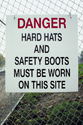
Every manufacturing plant will have liability insurance. Liability insurance is known as Worker's Comp Insurance and it protects the company from claims of negligence. If an employee was injured on-site, they can claim liability insurance and their costs will be covered. The employer will be protected from legal claims if the employee does try to sue the company. Another part of liability claims is product liability. Product liability is usually filed by a consumer that is suing the company for negligence. If your company wants to avoid lawsuits, they need to look for ways to reduce liability. Here are a few simple tips to help you reduce liability:
How to file an injury report legally for worker's compensation

Some professions are more dangerous and have more hazardous environments than others. In fields such as manufacturing, regardless of how safe workers are, accidents are bound to happen sooner or later. When this is the case, you will most likely need to file an injury report for worker's compensation.
Worker's compensation is awarded after an employee is injured on the job. The federal government provides a workers' comp program for every state, but each state sets its own laws and regulations regarding who is entitled to compensation and under what terms.
Continue reading "How to file an injury report legally for worker's compensation"What kinds of insurances do you need when you have a manufacturing plant?

In the manufacturing business insurance needs for employers and employees are extremely important.It is absolutely necessary to have insurance if you work or are running a manufacturing plant, but it is difficult to decide sometimes what kinds of insurances you need when you have a manufacturing plant.
Commercial Liability insurance
You can get some insurance package deals that will bundle together general liability insurance with property liability insurance.These packages are referred to as BOP or Business Owner Policy.The Business Owner Policy will usually cover most of the manufacturing liability needs, but be it sometimes differs with the size of the manufacturing plant.
How to earn a lean sensei certification
For those of you who are new to lean sensei certification you might be wondering what it is. And actually before you earn the certification or even find out how to earn the certification it is a good idea to learn what the program actually is. Basically lean sensei certification is a class that is offered where somebody is going to coach you on the basic principles and guidelines of lean six sigma. Which basically lean six sigma is a combination of both lean manufacturing and six sigma manufacturing. Basically what happens is tools from both manufacturing processes are used together to create lean six sigma. But in order to understand how lean manufacturing and six sigma work together to form lean six sigma you are going to need to understand what each of these manufacturing processes are.
For those of who are unfamiliar with the term Six Sigma let's take a minute to find out what it is. Six Sigma is a method or a set of techniques and in the business world it has become a movement that is focused on business process improvement. Six Sigma is a quality measurement and improvement program that is designed to focus on improving the capability of a company's business processes.
Continue reading "How to earn a lean sensei certification"The difference between manufacturing and semi-manufacturing
There are so many different things that are involved with manufacturing. Depending on what type of manufacturing you are getting involved with will depend on what you will be dealing with. One thing that you might want to know about especially if you are going to be doing your own manufacturing is the difference between manufacturing and semi-manufacturing. If you do not know the differences here is some information that might help you clarify the differences between manufacturing and semi-manufacturing.
The first thing you will want to know is what exactly the two are, the definition alone indicates the biggest difference between manufacturing and semi-manufacturing. Manufacturing is when a product is made from start to finish that starts with raw materials and finishes with a product that is ready for use. Semi manufacturing is something that is not completely manufactured, it does not start as raw material, or does not end as complete finished product.
Continue reading "The difference between manufacturing and semi-manufacturing"How to stay within commercial law regulations when manufacturing
Introduction
The manufacturing industry has many purposes.Manufacturers may create products that are geared towards satisfying consumer demand in order to make money in the market.Manufacturers may also create goods under the direction of the state in times where perceived needs are present.In any case, there are laws and regulations that apply to the manufacturing industry.Commercial law regulations are intended to maintain competition, goods, services, employee compensation, etc. at levels that satisfy the public's and the government's desire to ensure that a company's operations are within certain levels of acceptability.
Continue reading "How to stay within commercial law regulations when manufacturing"Where to find government regulations for manufacturing
When it comes to establishing regulations for the manufacturing industry, the government is eager to institute as many rules as they think are necessary in order to protect the health and safety of all parties involved.Yet at the same time government regulations are not intended to stifle the production abilities of the manufacturer.Many times regulations bring about a better way of production.Government regulations for manufacturing can be found in a variety of places.Four websites sponsored by the government that you can visit to find regulations specific to your type of manufacturing plant are:
- Business.gov
- Whitehouse.gov/omb/egov
- USA.gov
- Regulations.gov
The best management styles for manufacturing.
What are the best management styles for manufacturing? Manufacturing takes a great deal of pride and teamwork. The management styles that work to bring a higher quality of completed products with the smallest amount of expense is what most of the manufacturing companies are leaning towards.
With the competitive market in the field of manufacturing, it really is not a surprise that the manufacturing companies are looking for ways to work faster, make more profit and maintain a good level of quality in the process.
Continue reading "The best management styles for manufacturing."How to keep up with OSHA compliance measures
If you don't keep up with OSHA compliance measures, your sunk. OSHA compliance measures are serious things-no different than any other law-if you fail to follow them, consequences follow. Therefore, the question arises: How do I keep up with them? How do I make sure that I follow them closely enough that both me and my company are safe from potential trouble? These are questions that every manufacturer needs to keep in mind as often as possible. Now, that doesn't mean that your day need be totally consumed by such questions. You're a busy person, you've got a wide array of responsibilities. The ideal thing would be to be so compliant with OSHA that it's not something you have to worry about all the time, and to have people (or, if not people, yourself) scheduling regular times to learn about updates and additions to OSHA. So:
1. The first step on keeping up with OSHA compliance measures, then, is to keep up with them. That is, you should not only be familiar with OSHA compliance measures, you should keep track of where they are going. All this means is that you have plenty of work ahead of you, and by work I mean studying. You've got some reading to do. Now, if you can hire other men and women to do that reading, great. But the reading has got to be done, no matter what. The OSHA publishes its information both on the Internet and in pamphlets and books. Be aware of those Internet sites, be aware of those book and pamphlets, and, most importantly, be aware of what's inside of them.
Using polygraph (lie detector) tests in the workplace:
In a not so popular recently released Keifer Sutherland movie, the polygraph test was the determining factor deciding who the bad guy was. And we all should have paid more attention because we would have seen that the bad guy was the one who didn't take the test.
In this movie one of the many good guys was wrongly accused because when he took the polygraph test there were things he needed to hide, but he was not hiding what he was being accused of. Regardless, the polygraph test cannot tell the tester what they are trying to hide, but only that they are hiding something - so in this movie, the wrong man ended up going to jail.
Continue reading "Using polygraph (lie detector) tests in the workplace:"Dealing with confrontations in the workplace:
Confrontation in the workplace is impossible to avoid, but there are some ways of handling it that are better than others. Whether you are the one faced with having to confront someone, or whether you are being confronted, here are a few tips on how to get through it.
If you are the manager of a business it is most likely you will deal with confrontation often, that is simply the nature of managing. Because confrontation can have a seemingly negative connotation, you may wish to avoid this. But rather than avoid confrontation you must simply learn to rethink your perception of confrontation.